Fermented Onions vs. Pickled Onions: What’s the Difference?
Have you ever wondered whether fermented onions and pickled onions are the same thing? Although they may look similar and have a delicious tangy flavor, the two are prepared differently and can offer different nutritional benefits.
Fermented onions are becoming increasingly popular among people interested in gut health, natural food preservation, and healthy eating. But what makes them different from regular pickled onions? And are fermented onions really good for your digestive system?
In this article, we’ll explore the differences between fermented and pickled onions, their potential health benefits, their connection to prebiotics, and how long they take to ferment and store.
What Is the Difference Between Fermented Onions and Pickled Onions?
The main difference between fermented onions and pickled onions is how they develop their sour flavor.
1. Pickled Onions
Traditional pickled onions are usually prepared using vinegar, water, salt, and sometimes sugar and spices.
The vinegar provides the acidity, giving the onions their familiar tangy taste. This method is relatively quick, and the onions can often be enjoyed after a short preparation period.
2. Naturally Fermented Onions
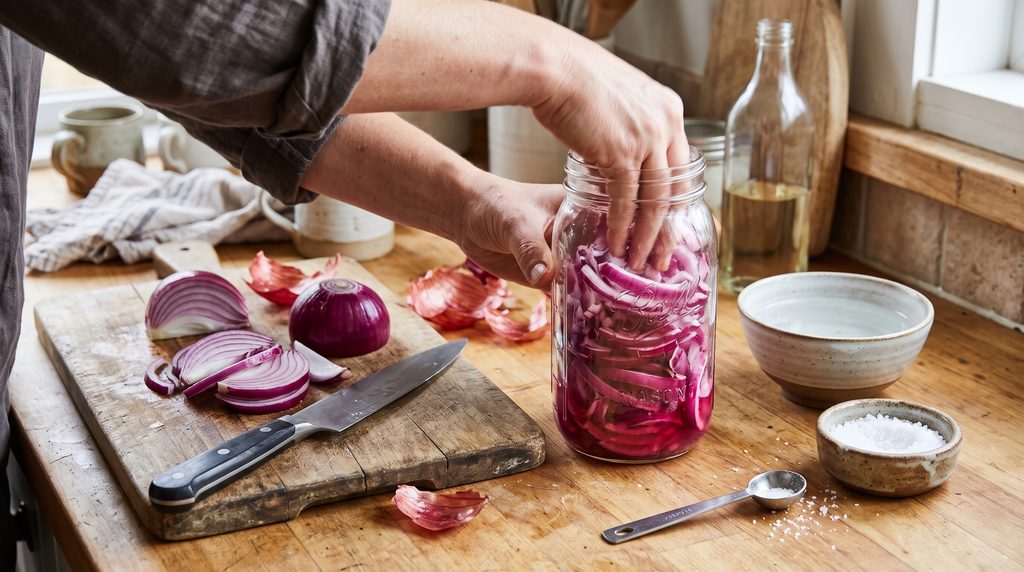
Fermented onions are prepared using salt and water, without adding vinegar as the primary source of acidity.
During natural fermentation, beneficial lactic acid bacteria convert naturally occurring sugars into lactic acid. This process gives the onions their characteristic sour flavor while helping preserve them.
Unlike vinegar-pickled onions, naturally fermented onions may contain live microorganisms when they are properly prepared, stored, and not heat-treated.
Are Onions a Good Source of Prebiotics?
Yes! Onions naturally contain prebiotic fibers called fructans, including inulin.
Prebiotics are types of dietary fiber that serve as food for beneficial bacteria in the gut. They help support a healthy gut microbiome and normal digestive function.
Adding onions to a balanced diet can therefore contribute to your daily fiber intake.
However, onions are also high in FODMAPs, which means they may cause bloating, gas, or digestive discomfort in people with irritable bowel syndrome or FODMAP sensitivity.
What Are the Potential Benefits of Fermented Onions?
Fermented onions combine the nutritional properties of onions with the characteristics of natural fermentation.
Some potential benefits include:
- Supporting gut health: Onions contain prebiotic fibers that help nourish beneficial gut bacteria.
- Adding dietary variety: Fermented vegetables provide different flavors and textures to everyday meals.
- Natural preservation: Lactic acid produced during fermentation helps preserve vegetables.
- Supporting a balanced diet: Fermented onions can be a flavorful addition to salads, sandwiches, and other dishes.
Keep in mind that not all fermented onions contain live cultures, especially if they have been pasteurized or heat-treated.
How Long Does It Take to Ferment Onions?
The fermentation time depends on several factors, including room temperature, salt concentration, and the size of the onion pieces.
In general, naturally fermented onions may take anywhere from several days to around two weeks to develop their desired flavor.
During fermentation:
- Use a clean fermentation jar.
- Keep the onions completely submerged in the saltwater brine.
- Allow fermentation to take place under suitable conditions.
- Monitor the smell, appearance, and fermentation progress.
Proper preparation and food safety practices are essential when fermenting vegetables at home.
How Should You Store Fermented Onions?
Once the onions reach your preferred flavor, transfer the jar to the refrigerator to slow down fermentation.
Keep the onions submerged in their brine and always use clean utensils when serving them.
Discard the entire batch if you notice visible mold, a rotten smell, or other clear signs of spoilage. Proper acidity and safe fermentation practices are important for homemade fermented vegetables.
Fermented Onions or Pickled Onions: Which One Should You Choose?
Both options can add flavor and variety to your meals, but the best choice depends on what you’re looking for.
If you want a quick and easy tangy topping, vinegar-pickled onions are a great option.
If you’re interested in traditional fermentation and adding naturally fermented foods to your diet, fermented onions are worth trying.
Both can be part of a balanced diet, but remember that fermented foods are not a replacement for a healthy, varied eating pattern.
Final Thoughts
Fermented onions are more than just a flavorful topping. They are an interesting way to explore natural food preservation while enjoying the nutritional properties of onions.
Whether you prefer quick vinegar pickles or naturally fermented vegetables, understanding the difference can help you make better choices in your kitchen.
**Now it’s your turn! Which vegetables do you enjoy fermenting at home: onions, cucumbers, carrots, or cabbage? Share your favorite in the comments!